
Mujeres, Fiber mixed media and Collages
Mujeres (Mother Earth)
In the series Mujeres, Felisa Federman constructs a visual cartography in which identity, territory, and displacement intertwine through stratified compositions that oscillate between the figurative and the nearly abstract. The female figure appears as a symbol of humanity — not as an individual portrait, but as a collective archetype — a body that embodies historical memory and cultural belonging. The women multiply, gather, and emerge in transit. The recurring gesture of hands placed over the head or covering the eyes suggests tension and awareness, an intermediate state between introspection and resistance. These figures do not represent a specific narrative, but rather the human condition in the face of territorial change and the transformation of identity.
In Federman’s work, territory is not merely geographic; it is cultural, symbolic, and experiential. It is the space one inhabits, abandons, reconstructs, or chooses. The series offers an open reflection on migration and settlement from a transhistorical perspective. Regardless of time or place, every displacement leaves visible traces within a community’s visual language. The fragility of the materials — handmade paper, fibers, assemblages, and layered structures — dialogues with the persistence of cultures that survive displacement. In this process, territories stripped of their original people may fall into oblivion, becoming memory. Within this tension between vulnerability and continuity lies the conceptual core of the series.
Thread functions as a cartographic line: it connects surfaces, defines spaces, creates networks, and marks routes. It is not ornament; it is structure. It acts as a bridge between territories and as a record of movement. Through its ancestral familiarity, the textile element activates in the viewer a deep cultural memory: to recognize patterns, decipher forms, and identify traces of origin. With each migration, visual languages travel alongside those who move. Upon settling in new territories, these codes transform, intermingle, and evolve. Federman’s work reflects this process through layered surfaces that preserve traces of origin and signs of adaptation. Each piece thus becomes a space where individual memory and collective memory engage in dialogue without hierarchy.
The series suggests that no identity is static and no territory remains untouched. Every culture emerges from encounters, losses, and adaptations. Within this framework, the woman does not appear as an isolated figure, but as a bearer of continuity. If the origin of humanity can be scientifically traced through mitochondrial DNA — transmitted exclusively from mother to daughter — then cultural memory, too, is carried through invisible threadsthat traverse generations. This matrilineal inheritance, which allows us to trace our most ancient roots, finds a visual echo in Federman’s work: layers, fibers, and structures that preserve the imprint of origin even amidst displacement.
In Mujeres (Mother Earth), the woman thus reveals herself not only as symbolic territory, but as origin, transmission, and continuity of the human experience. Collective memory, like genetics, advances step by step toward its roots, persisting even as the landscape changes.
Curatorial Text by Miguel Pérez Lem
Director, White Cloud Art Gallery

Anahi's legend
Mixed media on canvas 40’’x30’’
$2,500
Limited edition available variable sizes
12×16 on paper $120

Acid rain over DC. 24x24
Mixed media on canvas
$900
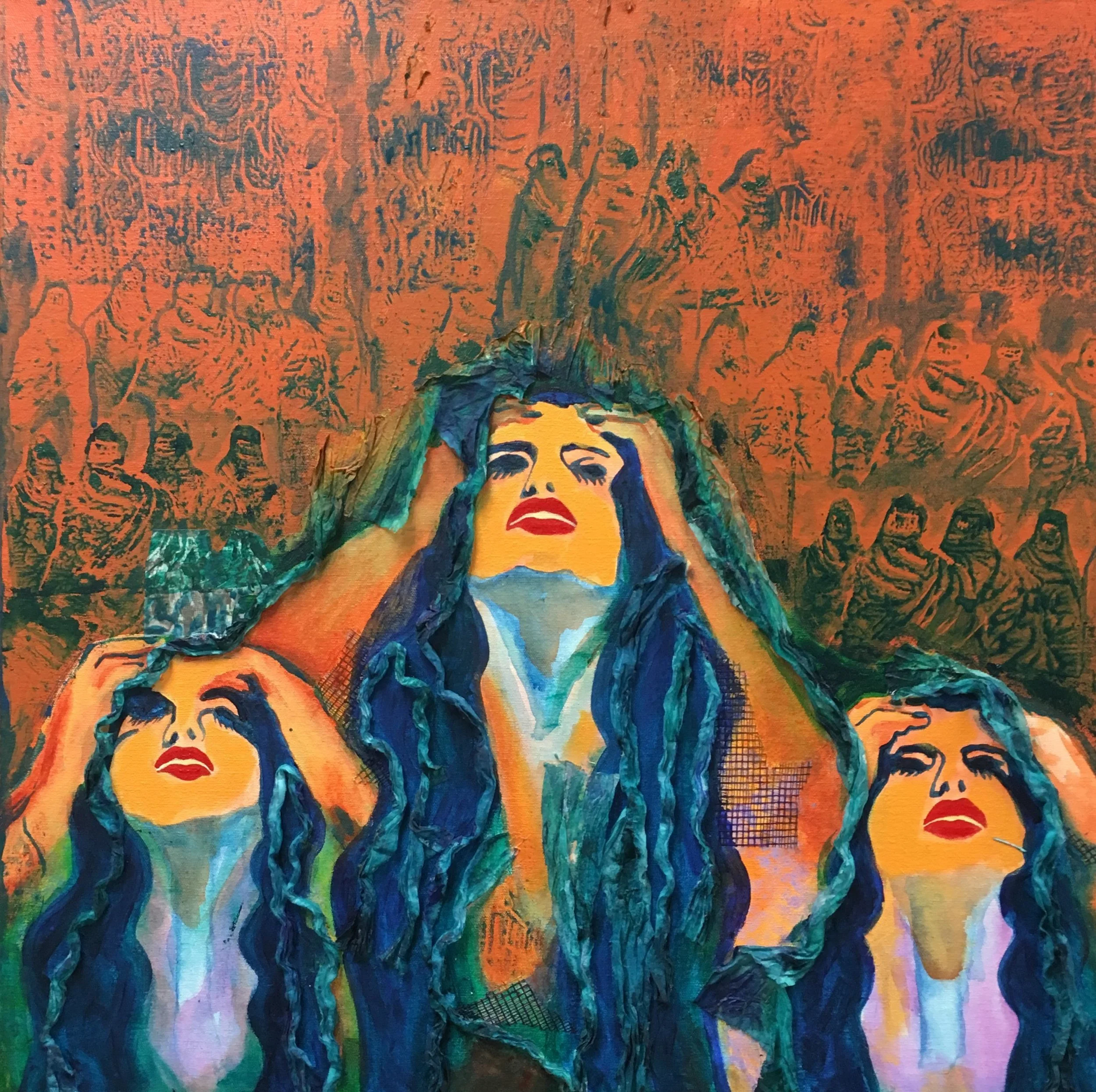
Reallyx3. 24x24
Mixed media on canvas
$900

Left behind 24x17
Fiber mixed media on canvas
$800
Using the woman’s face, the shape of bundles, possible hair, veils, tent, covers as a metaphor of containers, “contenedores” places to protect others or oneself.
Collective memories are bound to migration, labor and the evolving landscapes of identity. My works through reclaimed materials- reveals how movements across borders and cultures shape not only individual lives, but whole social struggle and creative resilience.
Together my artworks map histories of displacement, hope, memory and belonging across generations and continents. I invite the viewer to see beyond the surface of shapes and textures. The titles help the public to look for clues, but I do not describe facts easily, I provoke an active participation of the spectator. Their interpretations are open, according to their one background physical, cultural and geographical and emotional.
2024

Sisters 3 panels 60x24
Mixed media on canvas
$2000

Refugees dreams 30x13
Fiber mixed media on canvas
$800

Birds and women
Mixed media on canvas 28x24
$1200
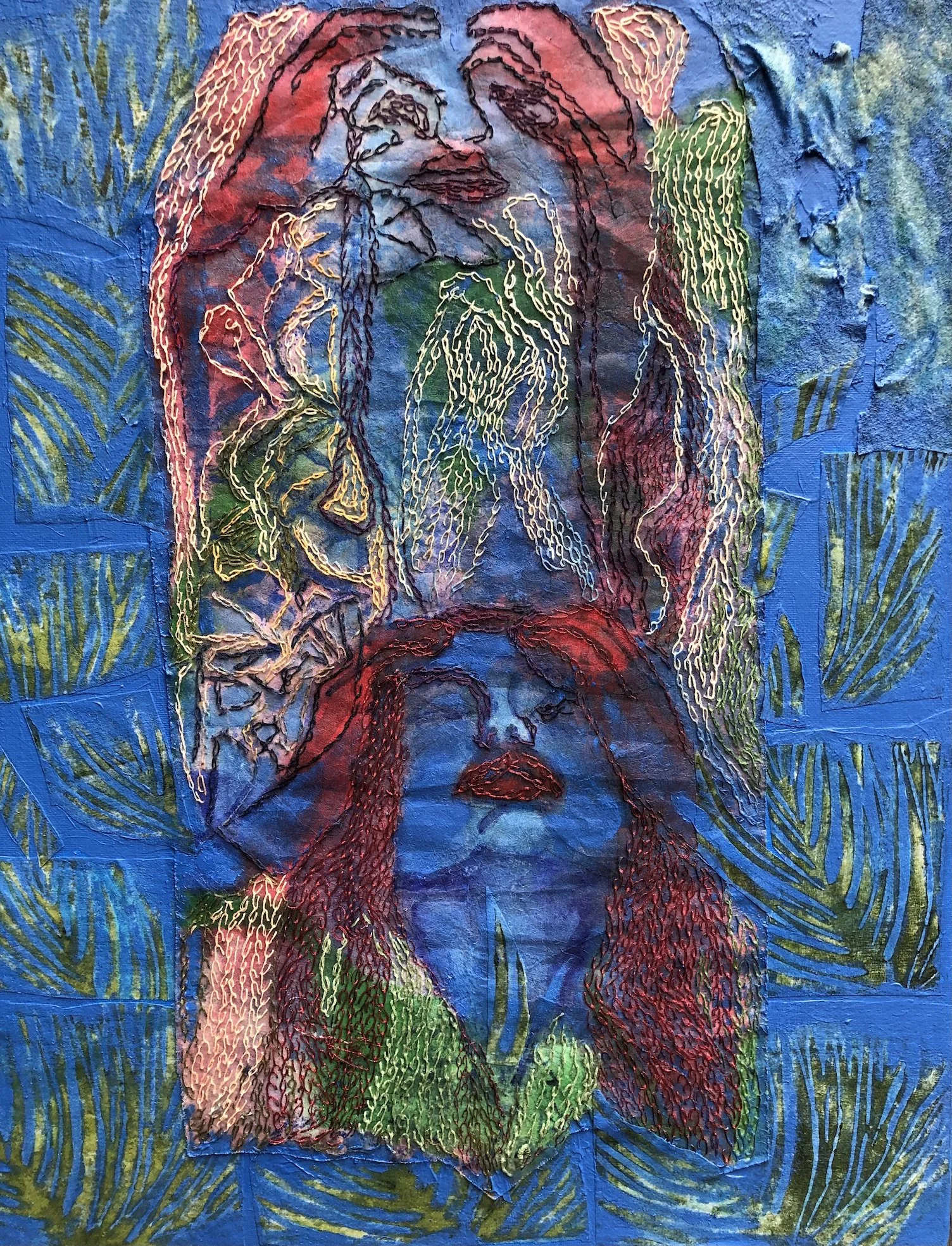
Embodiment 16x20
Fiber mixed media on canvas
$700

Displacement 24x18
Fiber mixed media on wooden panel
$1000
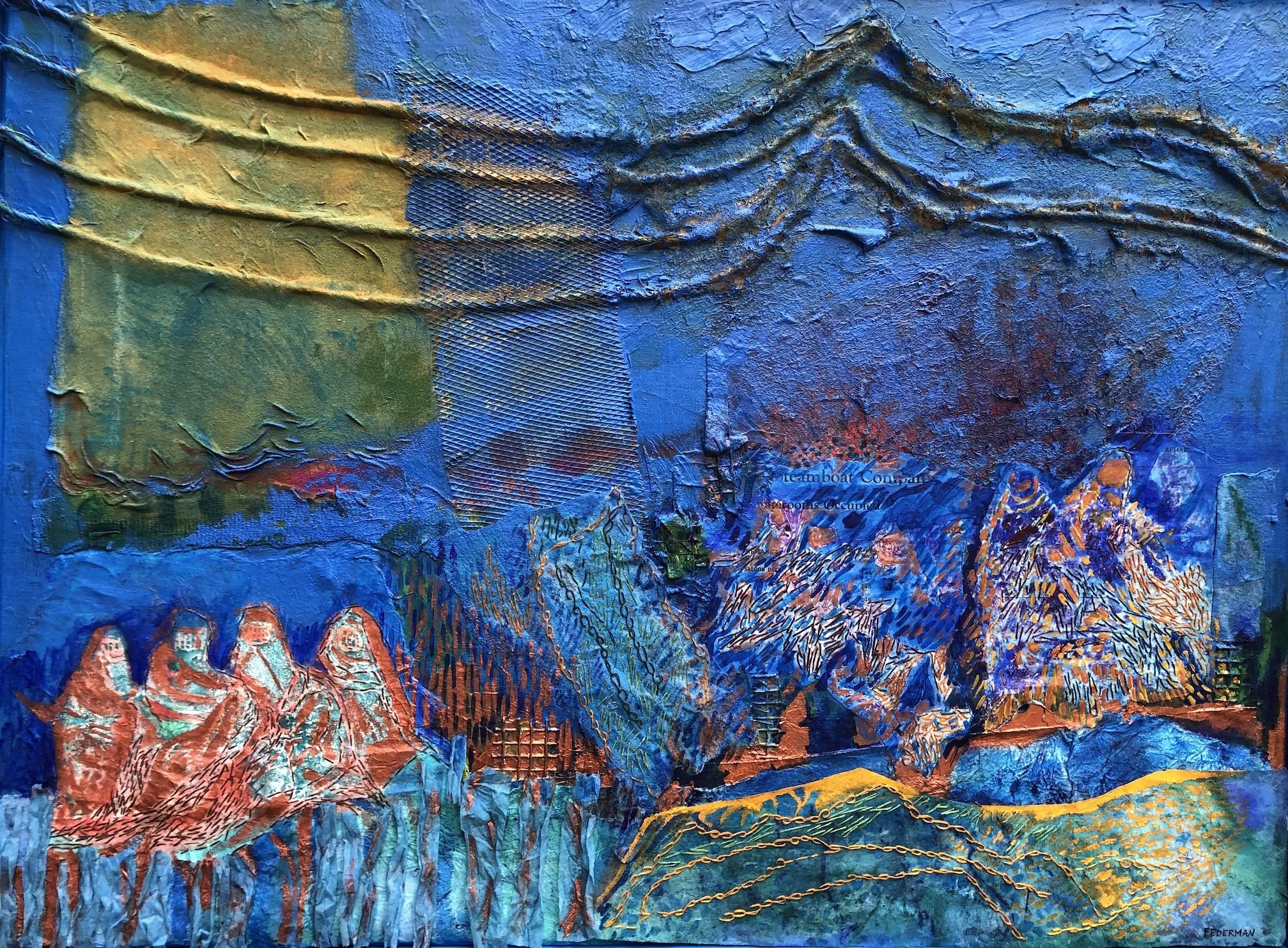
Transient 24x28
Fiber mixed media on wooden panel
$1000

Ignored 12x12 $400
Fiber mixed media on canvas
$400
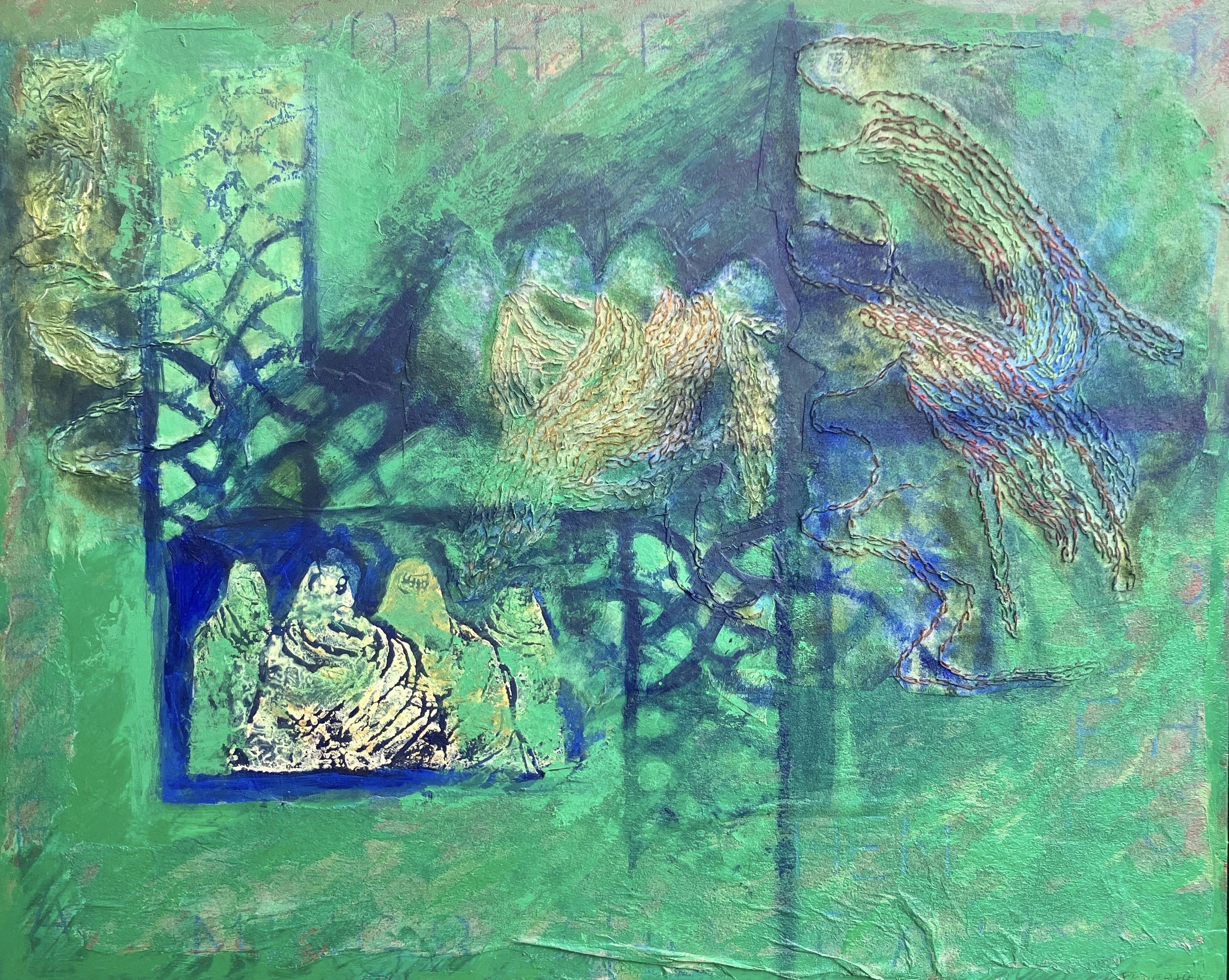
Territory 17x21
Mixed media on wood panel
$800

Settlements and sunflowers 24x21
Fiber mixed media on wooden panel
$1100

Refugees mirage
SOLD
Mixed media on canvas 22x26
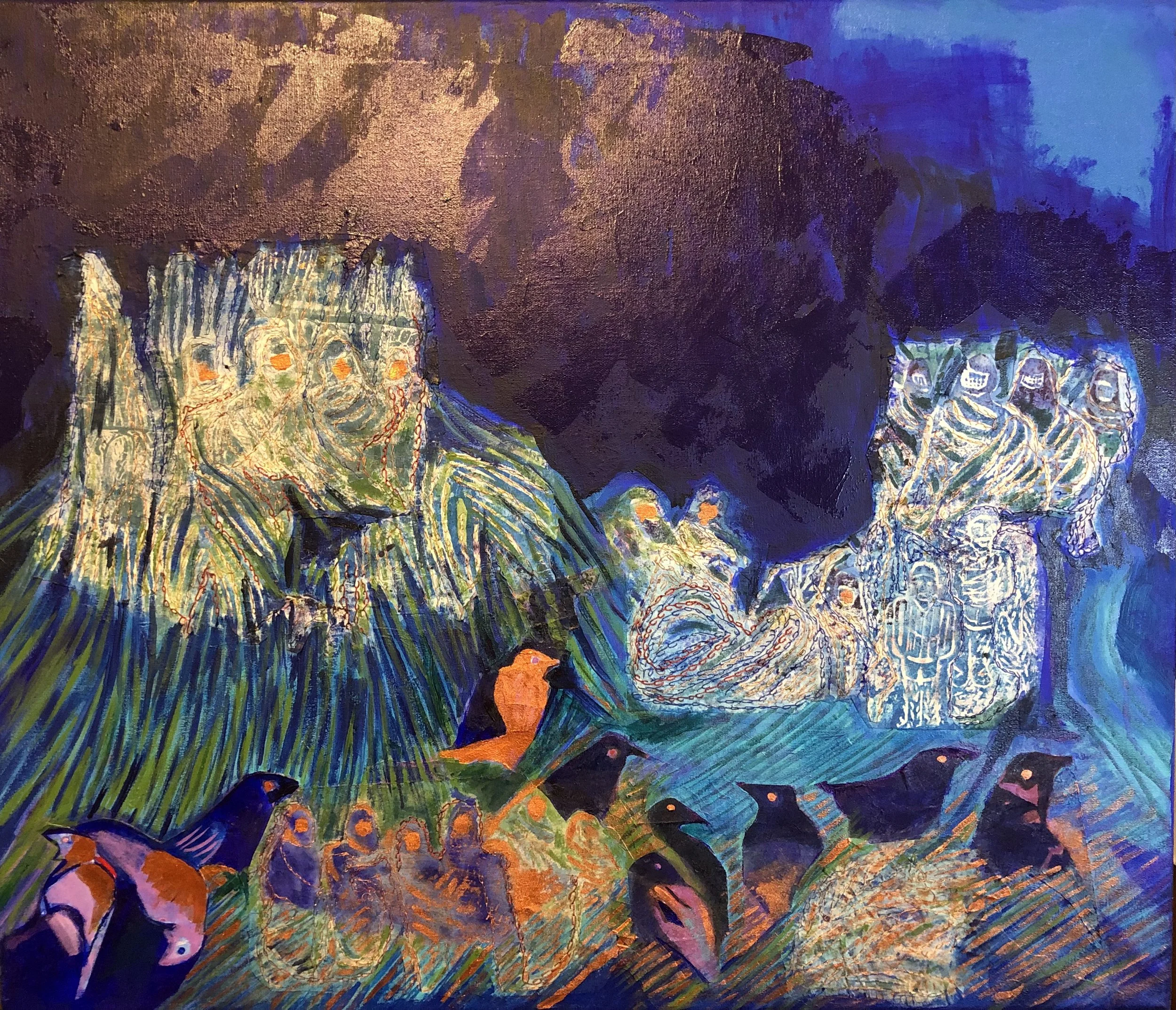
Refugees and birds
Mixed Media on canvas 28×24
Sold
Quisque iaculis facilisis lacinia. Mauris euismod pellentesque tellus sit amet mollis.